
Project highlights
- Region: Southern Africa
- Industry Sector: Mining and Minerals
- Commodity: Copper
- Project: Life-of-Mine Pit Dewatering
- Scope: Feasibility Study and Detailed Design
- Services: Civil, Mechanical, Hydraulic and Electrical Engineering
- Duration: Five-Year Implementation Plan
- Project Value: $TBC
Project details
Introduction/Overview:
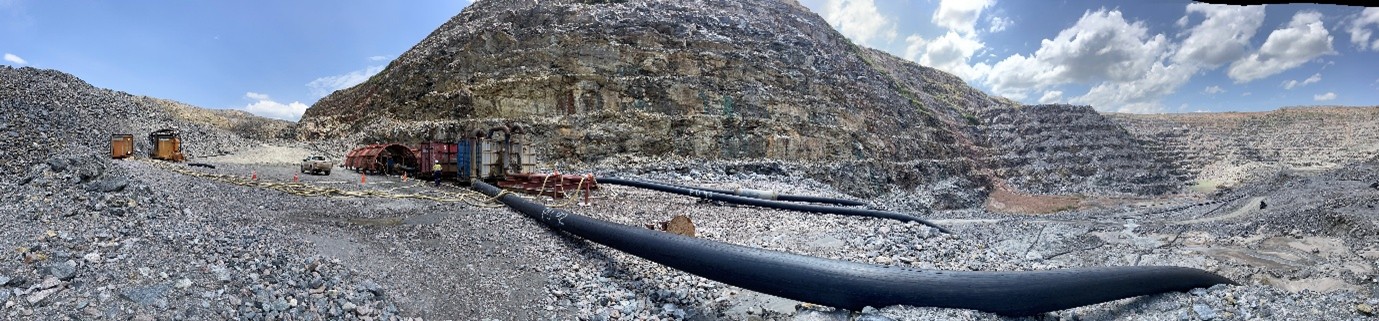
CEMS was appointed to undertake the detailed design for the Life-of-Mine (LOM) pit dewatering system for a large-scale copper mining operation in Zambia. Following the completion of feasibility studies in 2024, the project aims to provide a sustainable and flexible dewatering solution capable of supporting ongoing mining activities and future pit expansions.
The operation comprises multiple pits at various stages of development, with the initial design focusing on the first five years of mining activities. As the individual mining areas progress and eventually merge into larger super pits, the dewatering requirements continuously evolve. The project therefore required a robust and adaptable system capable of accommodating changing pit geometries, varying groundwater inflows and future mining sequences while maintaining safe and efficient operations throughout the life of the mine.
The Solve:
CEMS developed an integrated dewatering strategy centred around standardised, modular infrastructure that can be relocated and expanded as mining progresses. The system was designed to maximise the use of existing infrastructure while incorporating new pumping stations, pipelines, tanks and electrical reticulation into a flexible “leapfrog” arrangement.
Detailed hydraulic assessments were undertaken to determine expected inflows, pumping capacities, recovery periods and equipment requirements for each stage of pit development. Standard pump configurations and pipeline systems were established to provide consistency across the operation, improving reliability and simplifying maintenance requirements.
The design incorporated strategically positioned pumping stations, with maximum pumping heads and capacities assessed over yearly intervals during the first five years of operation. Provision was also made to accommodate future mine development and life-of-mine requirements, ensuring that the infrastructure can evolve alongside the expanding pits.
By adopting a modular approach, the dewatering system allows infrastructure to be progressively relocated and reused as mining advances. The design further considered operational flexibility, environmental compliance and the management of water quality to ensure long-term sustainability and responsible water stewardship.
The resulting solution delivered:
- A fully integrated life-of-mine dewatering strategy.
- Standardised pumping systems to improve operational efficiency and maintenance.
- Flexible infrastructure capable of adapting to changing pit geometries and mining schedules.
- Optimised pumping capacities based on expected groundwater inflows and recovery requirements.
- Integration of existing and new infrastructure to minimise capital expenditure.
- A scalable system designed to support future pit expansions and mine development.
Conclusion:
The Life-of-Mine Pit Dewatering project demonstrates CEMS’ capability to deliver practical and sustainable water management solutions for large-scale mining operations across Africa. By combining hydraulic modelling, mechanical design, electrical infrastructure and operational considerations, CEMS developed a flexible and robust dewatering system capable of supporting safe and efficient mining throughout the life of the asset.
The project highlights the importance of proactive water management and showcases CEMS’ ability to provide integrated engineering solutions that adapt to changing mining conditions while ensuring long-term operational reliability and sustainability.